Uric acid blood test: what moves it between draws
Uric acid usually comes on a metabolic or kidney panel without anyone asking for it. Most people only notice it when it's flagged, then search "uric acid" and land on pages about gout.
A raised uric acid and gout are different things. Many people with a high result never get gout, and during a gout attack the blood level can even come back normal. Uric acid is a waste product, and its level depends on how much the body makes and how much the kidneys clear. Both of those change with ordinary things: weight, drinks, fasting, training and several common medicines. A series of results taken the same way says much more than one.
What uric acid is
Uric acid is what the body makes when it breaks down purines, building blocks of DNA that are in your own cells and in food. About two thirds leaves through the kidneys and the rest through the gut. Most mammals break uric acid down further; humans don't, which is why our levels are comparatively high.
When the level is high, uric acid can form crystals, in joints (gout) or in the kidneys (stones). Whether that happens depends on much more than one blood result, which is why it's a question for your doctor.
What raises uric acid
| What | Why |
|---|---|
| Weight gain and insulin resistance | High insulin makes the kidneys hold on to uric acid |
| Alcohol, especially beer and spirits | More made, less cleared |
| Sugary drinks and fructose | Fructose breakdown makes uric acid in the liver |
| Purine-rich food: organ meats, some seafood | More purines to break down |
| Fasting, very low-carb diets, rapid weight loss | Ketones compete with uric acid in the kidneys |
| Not drinking enough | Less cleared |
| Very hard exercise | More cell breakdown, less cleared for a while |
| Some medicines, such as thiazide diuretics and low-strength aspirin | Less cleared |
Things that lower it include weight loss once it has settled, cutting alcohol and sugary drinks, and some medicines that happen to increase how much the kidneys clear, along with the ones prescribed for it.
What one person's results look like
This is uric acid across 13 tests over two years, with the stacks shaded:
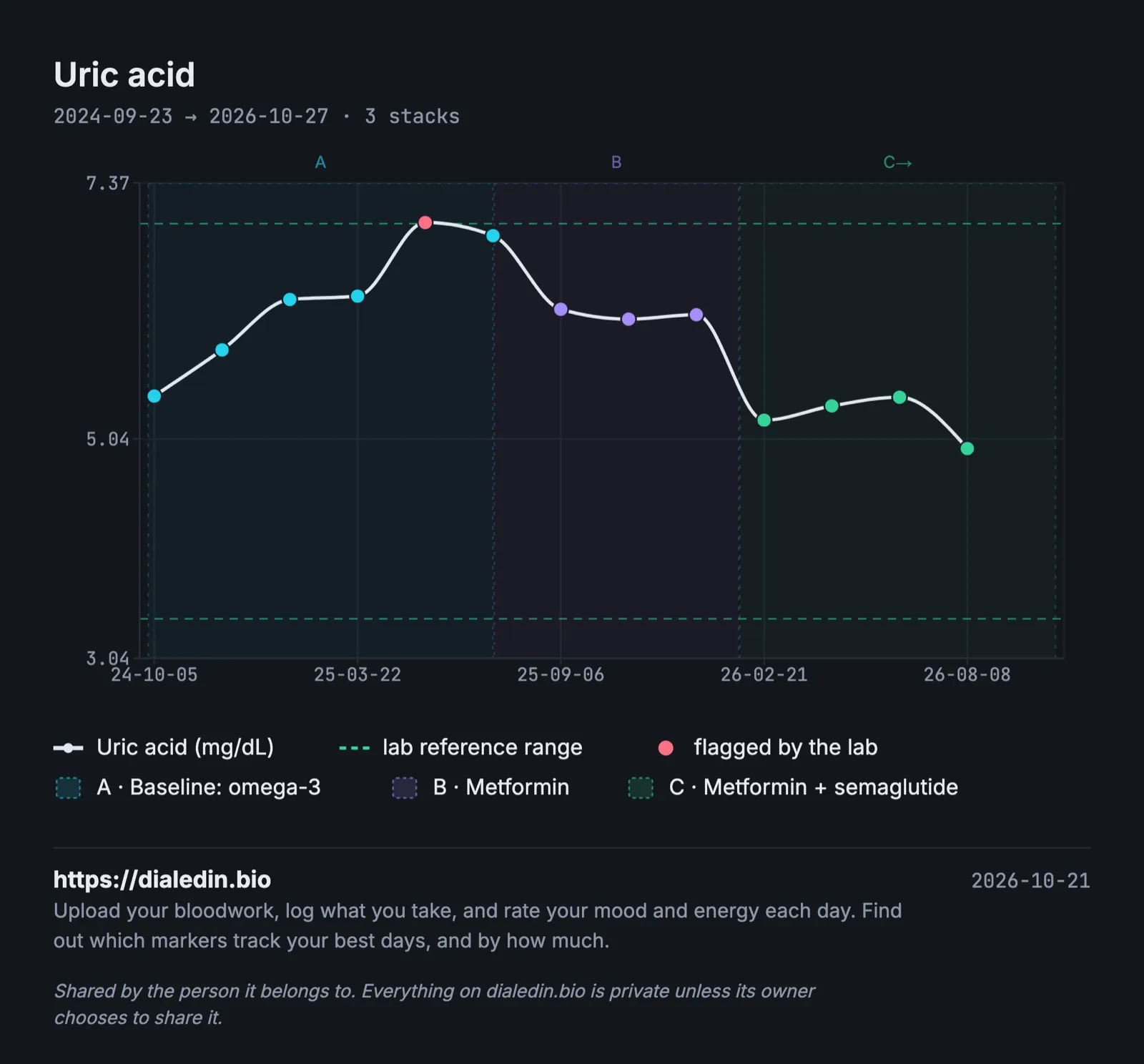
Sample data, not a real person.
The climb in the first year happened while every other result stayed in range and this person's weight went up. It came back down in two steps that line up with the two later stacks and with weight loss. One flagged result wouldn't show that shape. Thirteen results on a timeline do. The same person's HbA1c and glucose followed a similar path, which is common: uric acid often moves with the rest of the metabolic picture.
How to make uric acid results comparable
Skip alcohol for a couple of days before
Alcohol raises uric acid quickly and is the most common reason for a surprise result.
Keep the meal before ordinary
A big seafood or organ meat dinner the night before can nudge it up. So can a large sugary drink.
Don't test in the middle of a fast or a crash diet
Ketones from fasting or very low-carb eating raise uric acid. A result taken then describes the diet.
Drink normally
Dehydration concentrates the blood and slows clearing. Test in your usual state.
Avoid very hard exercise the day before
A long race or an unusually hard session can raise it for a day or so.
Note medicines and their start dates
Diuretics, aspirin, some blood pressure medicines and any medicine for uric acid itself all change it. A date next to the result explains a step.
Watch the units
US labs report mg/dL, many others µmol/L. 1 mg/dL is about 59.5 µmol/L, so 6 mg/dL is about 357 µmol/L.
How often is uric acid checked?
Usually with a routine metabolic panel, on whatever schedule your doctor sets. If you've had gout, kidney stones or started a medicine for uric acid, it's checked more often, and your doctor sets that rhythm. Our post on insulin resistance tests covers other tests that tend to travel with it, and the one on how to read a lipid panel covers the panel usually drawn on the same morning.
A record you can keep by hand
| Date | Lab | Uric acid (mg/dL) | Weight (kg) | Alcohol in last 48 h | Fasting or dieting | Notes |
|---|---|---|---|---|---|---|
| 2025-01-26 | City Lab | 6.3 | 99.1 | no | no | |
| 2025-05-18 | City Lab | 7.0 | 101.2 | 2 beers | no | |
| 2026-06-14 | City Lab | 5.4 | 91.0 | no | no |
Weight and alcohol are the two columns most likely to explain a change.
Where dialedin fits
We built dialedin so a result like uric acid can be read next to the things that move it.
You upload a lab PDF and it's read into individual markers, which you check before saving. Every report goes onto one timeline, and the same marker under different lab names stays one line. You record what you take and when, and you can log your weight, so a uric acid trend sits next to both. Optional daily check-ins show how you felt, and you can export your history as a PDF for your doctor.
It's free while we're in beta. If uric acid keeps getting flagged, put it on one timeline next to your weight and the rest of your panel.
This article is general information, not medical advice, and it can't take your own history into account. Talk to your doctor about your uric acid results, especially if you've had gout or kidney stones.